
The Cult of Positivity Is Lying to You

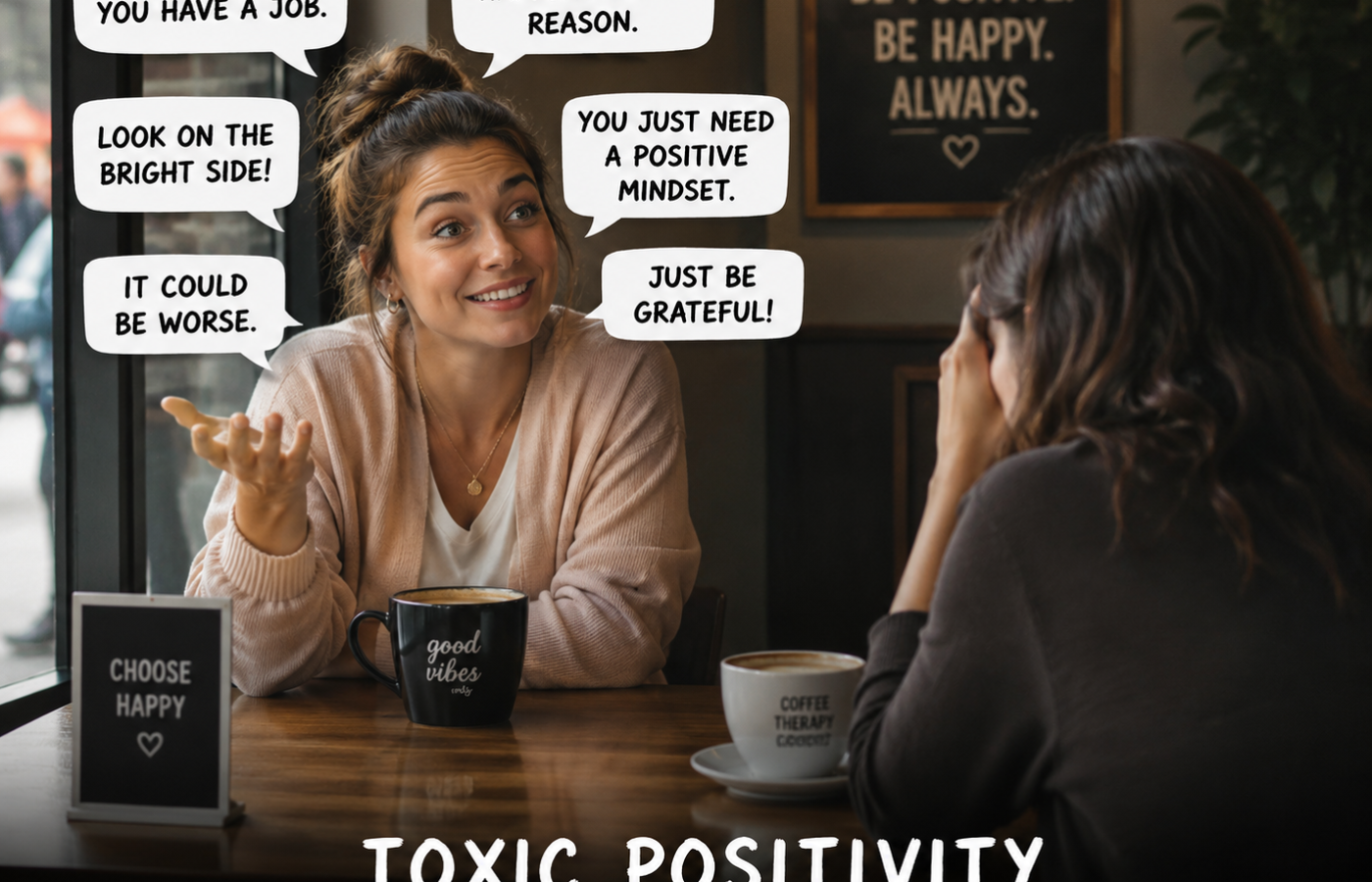
Somewhere along the way, sadness became a personal failing. Grief became “a mindset issue.” Anger became something to “release,” like it’s a toxin and not information. We built an entire culture around the idea that if you just reframe hard enough, gratitude-journal hard enough, vision-board hard enough, the bad thing will stop being true. This is toxic positivity, and it’s everywhere.
It won’t. It just gets quieter. And quiet isn’t the same as gone.
The Truth About Toxic Positivity
Toxic positivity doesn’t heal wounds. It just tells them to stop bleeding where people can see. It hands you a script — “everything happens for a reason,” “good vibes only,” “focus on the positive” — and asks you to perform recovery instead of living through it. The people saying these things aren’t usually cruel. Most of them are terrified. Your pain reminds them that the floor can drop out from under anyone, including them, and the fastest way to make that fear go away is to convince you it’s optional.
It isn’t. Some things are just bad. A parent dies and there is no growth arc waiting on the other side that makes it worth it. A relationship ends and you don’t owe anyone a redemption montage. Sometimes the lesson is that there is no lesson — the universe doesn’t run on narrative logic, it just runs.
None of this means wallow forever, or that hope is naive. It means the hope has to be built on the actual ground, not on a demand that you skip the part where it hurts. Real resilience doesn’t look like a highlight reel. It looks like a person who cried on the bathroom floor on Tuesday and still showed up to work on Wednesday — not because they “chose joy,” but because showing up is sometimes the only version of strength that’s actually available.
If someone in your life is drowning, don’t hand them a life vest made of slogans. Sit in the water with them for a second. That’s the whole practice. That’s it.